National Science Day | Celebrating Curiosity, Discovery, and Scientific Progress
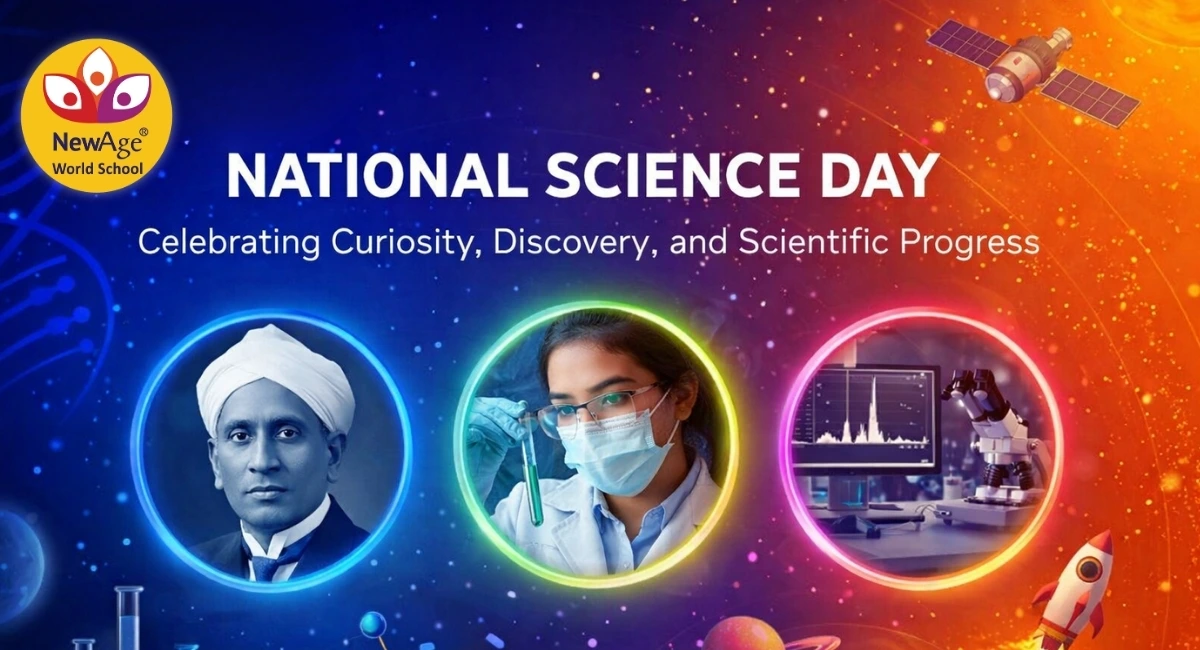
Table of content
Introduction
The Discovery That Made History
What Is Raman Spectroscopy?
Why National Science Day Matters
India’s Growing Scientific Strength
Conclusion
Introduction
Every year on 28 February, India celebrates National Science Day to honour one of the most important scientific discoveries made in the country — the Raman Effect. This day recognizes the contribution of Indian science to the world and highlights the importance of scientific thinking in everyday life. It also serves as a reminder that curiosity, careful observation, and experimentation can lead to breakthroughs that change how we understand nature.
The Discovery That Made History
In 1928, Indian physicist Sir Chandrasekhar Venkata Raman discovered a unique property of light while studying how it passes through transparent materials. He found that when light interacts with matter, a small portion of it changes its wavelength after scattering. This phenomenon, later known as the Raman Effect, proved that light particles exchange energy with molecules.
This discovery strengthened emerging quantum theories and opened new pathways for studying molecular structure. It later earned Raman the Nobel Prize in Physics in 1930 and placed India firmly on the global scientific map.
What Is Raman Spectroscopy?
The principle behind the Raman Effect led to the development of Raman spectroscopy — a powerful analytical technique used across many fields. Today, it helps scientists examine the composition and structure of substances with great precision.
Its major applications include:
✅ Identifying chemical compounds
✅ Studying advanced materials and nanotechnology
✅ Medical diagnosis and biomedical imaging
✅ Environmental testing and pollution tracking
✅ Pharmaceutical research and quality control
✅ Forensic investigations
This technique continues to support both research laboratories and industrial innovation.
Why National Science Day Matters
National Science Day is not just about remembering a discovery. It is a nationwide effort to promote scientific awareness and rational thinking. The celebration encourages students and citizens to question, explore, and rely on evidence rather than assumption.
The main goals include:
✅ Promoting logical reasoning and critical thinking
✅ Increasing public understanding of science and technology
✅ Inspiring young people to pursue STEM careers
✅ Recognizing the work of scientists and researchers
✅ Highlighting the role of science in national development
Developing a scientific temper is considered a civic responsibility and is essential for a progressive society.
Science plays a vital role in shaping almost every aspect of modern human life. From the moment we wake up until we go to sleep, scientific inventions and discoveries influence our daily activities in countless ways. Advances in medical science have greatly improved healthcare systems by enabling accurate diagnosis, effective treatments, and prevention of many diseases. Vaccines, modern surgical techniques, and advanced medical equipment have increased life expectancy and improved overall well-being.
Digital technology, which is a product of scientific progress, has transformed communication and education. People can now connect instantly across the world through smartphones, the internet, and social media platforms. Online learning, virtual classrooms, and digital resources have made education more accessible and interactive. Science has also changed the nature of work by introducing automation, artificial intelligence, and advanced tools that increase efficiency and productivity.
Scientific research in renewable energy sources such as solar, wind, and hydro power supports sustainable development by reducing dependence on fossil fuels. Environmental science helps us understand climate change, pollution, and conservation methods, encouraging responsible use of natural resources and protection of ecosystems.
Space research and satellite technology have become essential for modern society. Satellites assist in navigation systems like GPS, weather forecasting, communication networks, and disaster management by providing early warnings during natural calamities such as cyclones and floods. These applications demonstrate that scientific progress extends far beyond laboratories and directly enhances the quality of human life.
Science education is equally important because it develops critical thinking and practical skills. Students learn observation, analysis, experimentation, and problem-solving through scientific study. It also teaches patience and perseverance, showing that success often comes after repeated trials and learning from failures. Thus, science not only improves living standards but also shapes logical thinking and innovation in society.
India’s Growing Scientific Strength
India continues to expand its presence in global science and technology through space missions, medical research, information technology, and clean energy innovation. National research institutions and universities contribute to both fundamental discoveries and practical solutions.
National Science Day provides a platform to showcase these achievements, build scientific pride, and encourage international collaboration to solve shared global challenges.
Each year, Science Day celebrations are organized around a specific theme that reflects current national and global priorities in science and development. The theme for 2026, “Women in Science: Catalysing Viksit Bharat,” focuses on promoting the active participation and empowerment of women and girls in scientific and technological fields.
This theme recognizes that women play a crucial role as researchers, innovators, educators, and leaders who contribute significantly to scientific progress. Encouraging more women to pursue careers in science, technology, engineering, and mathematics (STEM) helps create diverse perspectives, leading to creativity, innovation, and better problem-solving. When women are equally represented in science, society benefits from a wider range of ideas and solutions.
The phrase “Viksit Bharat” refers to the vision of a developed and self-reliant India. The theme highlights that achieving this national goal requires equal opportunities for all citizens, including women, to contribute their talents and knowledge. By supporting girls’ education in science, providing mentorship, and removing social and professional barriers, the nation can build a stronger scientific community.
The theme also aims to inspire young girls to develop confidence in scientific learning and pursue careers in research and innovation. Celebrating the achievements of women scientists encourages future generations to break stereotypes and participate actively in nation-building through science.
Thus, the 2026 theme emphasizes equality, inclusion, and empowerment, showing that women in science are key drivers of innovation and essential partners in India’s journey toward sustainable and inclusive development.
Conclusion
National Science Day celebrates more than a single discovery — it celebrates the spirit of inquiry itself. It reminds us that progress begins with questions and grows through experimentation and evidence. By encouraging scientific literacy and responsible innovation, the day strengthens the foundation for a knowledge-driven and forward-looking nation.

Fathima Priya | Department of Science
















Leave a Reply
Your email address will not be published. Required fields are marked *
Comments
No comments available