Beyond Marks: Why Life Skills Matter for a Child’s Future
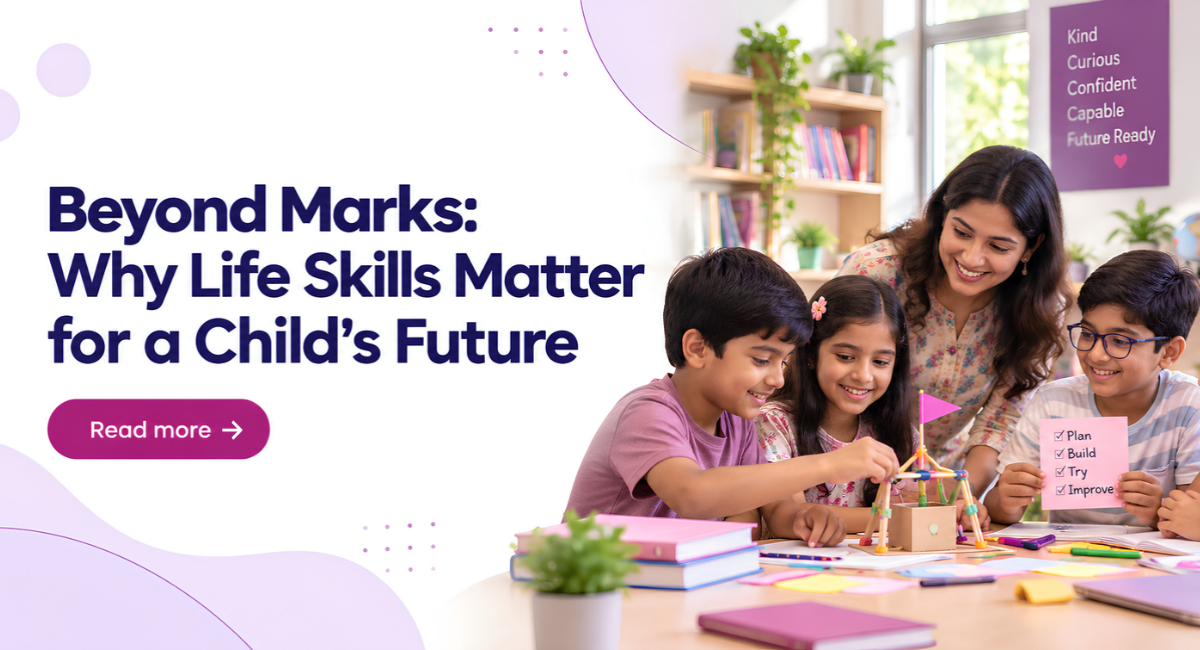
Table of content
- Introduction
- What Are Life Skills for Children?
- Communication and Confidence in Everyday Life
- Problem-Solving and Decision-Making Skills
- Responsibility, Teamwork and Independence
- Life Skills Education in Schools
- How Parents Can Build Life Skills at Home
- Frequently Asked Questions
- Conclusion
Introduction
Every parent wants their child to do well in school. Good marks show academic progress, but a child's future depends on much more than report cards. Children also need to know how to communicate, make decisions, solve problems, work with others and handle responsibilities.
This is where life skills for children become important. These practical abilities develop through school, family life and everyday experiences. A child may learn teamwork during a group project, responsibility by completing a simple task or confidence by speaking in front of the class. These lessons may not always appear in an examination, but they help children become more independent and prepared for real situations. Education becomes more meaningful when academic knowledge and practical skills develop together.
What Are Life Skills for Children?
Life skills are practical abilities that help children handle everyday situations with confidence and responsibility. Some essential skills for kids include communication, teamwork, problem-solving, decision-making, time management, responsibility and emotional awareness. For example, children working on a group project must listen to different ideas, share tasks and complete their part of the work. When they organise their school bags or remember an assignment, they practise planning and responsibility.
When children have a disagreement with a friend and try to solve it calmly, they practise communication and problem-solving. These skills develop through experience rather than memorising definitions.
Communication and Confidence in Everyday Life
Children use communication skills while speaking to teachers, working with classmates, asking questions and sharing their feelings at home. Good communication is not only about speaking clearly. Children also need to listen, understand another person's point of view and express disagreement respectfully.
Confidence grows alongside communication. A child who feels comfortable asking questions may find it easier to seek help when something is unclear. Presentations and classroom discussions can gradually make children more comfortable sharing their ideas. Schools can encourage these abilities through storytelling, group activities, projects and conversations.
Problem-Solving and Decision-Making Skills
Children face small problems almost every day. They may forget a notebook, struggle with an activity or disagree with a friend. Adults naturally want to help, but solving every problem for children can limit their chance to think independently. Decision-making can also begin with simple choices. Younger children might choose which book to read or which task to finish first. Older children can gradually handle bigger decisions and responsibilities.
UNICEF's information on skills development highlights the value of skills that support children and young people in learning, work and participation in society. Children will not always make the best choice, and that is part of learning. Small mistakes can help them understand consequences and think about what they might do differently next time.
Responsibility, Teamwork and Independence
Children gradually become more independent when adults give them responsibilities that match their age. A young child may keep books in the correct place. An older student can manage homework, prepare a school bag or take responsibility for one part of a group project. These simple tasks teach children that their actions matter.
Teamwork is another important part of preparing children for the future. Children regularly meet classmates with different ideas, personalities and strengths. Learning to cooperate can teach them patience, listening and respect. Sports, classroom projects and co-curricular activities offer useful opportunities to practise teamwork. Independence does not mean children have to manage everything alone. They still need guidance and support. The aim is to slowly allow them to take responsibility for suitable tasks and decisions. When children are trusted with small responsibilities, they can begin to feel more capable and understand that other people may depend on them.
Life Skills Education in International Schools
Schools provide many opportunities for children to practise useful skills because they interact with teachers and classmates every day. Life skills education in schools does not always need to be taught as a separate subject. Many important lessons can happen naturally during the school day.
A group project can teach teamwork. Classroom duties can develop responsibility. Presentations can improve communication. Sports can teach discipline and cooperation, while creative activities can encourage children to think differently. Teachers can also help children understand mistakes. Instead of only providing the correct answer, they can encourage students to think about what went wrong and how they could approach the situation differently.
How Parents Can Build Life Skills at Home
Home also provides many opportunities for children to practise useful skills. Parents can give children age-appropriate responsibilities, such as organising their belongings, helping with a simple household task or preparing their school bag. Giving children small choices can encourage decision-making. Parents can offer suitable options and allow children to explain why they prefer one choice. Conversations are equally useful. If a child has a problem with a friend, parents can listen and ask what the child thinks could improve the situation rather than immediately solving it for them.
Children also learn by watching adults. When parents communicate respectfully, manage responsibilities and remain calm while solving problems, children see practical examples of life skills. The aim is not to push children towards independence too quickly. It is to give them enough responsibility to learn while making sure support is available when needed.
Conclusion
Life Skills Education is no longer optional. It is essential preparation for success in academics, in relationships, and in the emotional life of every learner. By cultivating communication, emotional awareness, sound decision-making, and resilience, life skills give students the confidence to meet real-world challenges on their own terms.
When schools and parents nurture these abilities together, children grow into responsible, adaptable, and confident individuals, ready for whatever the future holds.
NewAge World School sets a strong example through its progressive curriculum approach. It prepares students for both academic and life challenges effectively. Choose an education that shapes skills, not just scores. Admissions are now open for 2026–27. Visit our campus or book a school tour to discover the NewAge learning experience.
Frequently Asked Questions
Do life skills help prepare children for the future challenges?
Yes. Life skills can help children become more confident, responsible and adaptable as they face new situations and greater responsibilities while growing up.
Do life skills help prepare children for the future?
Yes. Life skills can help children become more confident, responsible and adaptable as they face new situations and greater responsibilities while growing up.
How can parents teach life skills at home?
Parents can give children suitable responsibilities, allow simple choices and encourage them to think through everyday problems before providing a solution.
Can schools teach life skills along with academics?
Yes. Group projects, sports, classroom responsibilities, presentations and discussions can help children practise practical skills alongside academic learning.
What are some important life skills for students?
Communication, teamwork, decision-making, problem-solving, responsibility, time management and emotional awareness are useful skills for children to develop.
Why are life skills important for children?
Life skills help children communicate, make decisions, solve everyday problems, manage responsibilities and work with others. These abilities support them at school and in daily life.

NewAge World School





Leave a Reply
Your email address will not be published. Required fields are marked *
Comments
No comments available