World Rabies Day 2026: Teaching Children About Pet Safety and Responsible Animal Care
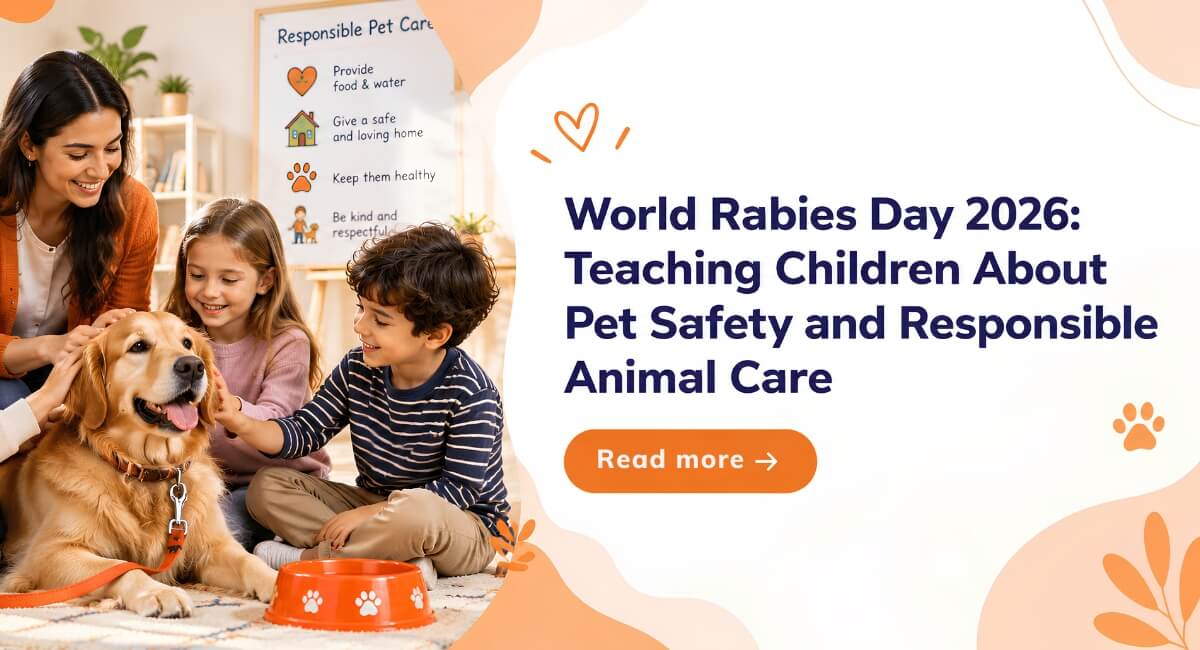
Table of content
- Introduction
- What Is World Rabies Day 2026?
- What Is Rabies and Why Should Children Know About It?
- Why Rabies Awareness for Children Matters
- Pet Safety for Kids
- Dog Bite Prevention for Children
- What Should a Child Do After an Animal Bite or Scratch?
- Responsible Pet Ownership for Children
- Teaching Children to Respect Street and Community Animals
- How Schools Can Teach Animal Safety
- How Parents Can Build Safe Habits at Home
- Raising Children Who Are Kind and Animal-Safe
- Build Learning Through Awareness, Responsibility and Care
- Frequently Asked Questions
Introduction
Children are naturally curious about animals. A friendly dog on the street, a playful puppy in the neighbourhood or a pet at a friend's home can quickly attract their attention. This love for animals is wonderful, but it is equally important to teach children how to interact with animals safely and respectfully.
World Rabies Day 2026, observed on 28 September, gives schools and families an important opportunity to talk about animal safety in a simple and age-appropriate way. The official theme for 2026 is “Stronger Together,” highlighting how families, communities, veterinarians, healthcare professionals, educators and governments all have a role in preventing rabies.
Rabies awareness should never be about making children afraid of animals. Instead, it should help them understand that animals have boundaries, pets need proper care and any bite or scratch must be taken seriously.
When rabies awareness for children is taught with kindness and practical examples, young learners can develop safer habits while also growing into responsible and compassionate animal lovers.
What Is World Rabies Day 2026?
World Rabies Day is observed every year on 28 September to increase awareness about rabies prevention and encourage action to stop deaths caused by the disease. The date also marks the anniversary of the death of Louis Pasteur, whose scientific work contributed to the development of the first rabies vaccine.
For World Rabies Day 2026, the World Health Organization has highlighted the theme “Stronger Together.” The message is simple. Rabies prevention works best when communities, healthcare workers, veterinary professionals, schools and families work together.
Schools can use the occasion to help children understand animal behaviour, safe interaction with pets and the importance of telling an adult immediately after a bite or scratch.
What Is Rabies and Why Should Children Know About It?
Rabies is a viral disease that can spread from infected mammals to humans, most commonly through bites or scratches. Globally, dogs are responsible for the vast majority of human rabies infections. WHO's September 2026 fact sheet states that dog bites and scratches cause about 99% of human rabies cases.
Rabies is especially important for families because children are significantly affected. WHO reports that around 40% of people who die from rabies are children below 15 years of age.
Once clinical symptoms of rabies appear, the disease is fatal. The good news is that rabies can be prevented when a possible exposure is recognised quickly and proper medical care, including post-exposure prophylaxis when required, is given promptly.
This is why children should learn a very simple message. They do not need to diagnose an animal or decide whether a bite is dangerous. They only need to know that any bite or scratch from an animal should be reported to a trusted adult immediately.
Parents looking for medically reviewed information can use the official WHO Rabies Fact Sheet.
Why Rabies Awareness for Children Matters
Young children may not always understand animal behaviour. They may run towards a dog, try to hug an unfamiliar pet or touch an animal while it is eating. To a child, these actions may feel friendly, but an animal can feel uncomfortable or threatened.
Effective rabies awareness for children should help them understand that animals communicate differently from people. A dog may move away because it wants space, while another animal may become frightened if someone suddenly reaches towards it.
Children should also understand that even a familiar animal needs respectful treatment. WHO advises that young children should not be left unattended around dogs, as children are among the groups at highest risk of dog-bite injuries.
When schools and parents explain these ideas calmly, children learn that being kind to animals also means respecting their comfort and personal space.
Pet Safety for Kids: Teaching Safe Interaction With Animals
Good pet safety for kids begins with one simple rule. Children should ask the pet owner and a trusted adult before touching an animal they do not know.
A child should approach a pet slowly and calmly rather than running towards it. Sudden movements, shouting or pulling an animal's ears, tail or fur can frighten the animal and increase the risk of a bite.
Children should also learn not to disturb an animal that is eating, sleeping, caring for young ones or trying to move away. When an animal walks away, the safest response is to let it go rather than following it.
Pets are not toys. They have feelings, needs and boundaries. Teaching this idea early helps children develop both safety awareness and empathy.
It is equally important for adults to supervise young children's interactions with pets. Even a gentle family pet may react unexpectedly if it feels frightened, hurt or trapped.
Dog Bite Prevention for Children
Dog bite prevention for children is not about teaching them to fear every dog. It is about teaching them how to behave safely around both familiar and unfamiliar animals.
Children should avoid approaching unknown or stray dogs, even if the animal appears friendly. WHO recommends educating children about avoiding stray dogs and reducing risky interactions that may lead to bites.
If an unfamiliar dog comes close, children should avoid screaming, running suddenly or trying to hit the animal. They should remain as calm as possible and seek help from an adult. Running may sometimes encourage a dog to chase.
Children should also never tease a dog through a gate, throw objects at animals or try to separate fighting dogs. These situations can increase the chance of injury and should always be handled by responsible adults or trained professionals.
For younger children, these messages are easier to remember when teachers practise them through stories, role-play and classroom conversations instead of only giving warnings.
What Should a Child Do After an Animal Bite or Scratch?
This is one of the most important lessons connected with World Rabies Day 2026.
If a child is bitten or scratched by a dog, cat or another potentially rabid animal, the child should tell a parent, teacher or another trusted adult immediately. The injury should never be hidden because the child is scared of being blamed.
WHO advises that a possible rabies exposure should be washed immediately with soap and running water for at least 15 minutes, followed by prompt medical assessment. A healthcare professional can then decide what post-exposure treatment is required.
Families should not wait for the child to feel unwell before seeking medical advice. Rabies prevention is most effective when possible exposure is dealt with promptly. The Government of India's National Rabies Control Programme also focuses on appropriate post-exposure treatment for animal-bite cases and community awareness.
A useful message for children is easy to remember: if an animal bites or scratches you, tell an adult immediately. The adult and healthcare professional can handle the next steps.
Responsible Pet Ownership for Children
Teaching responsible pet ownership for children is another valuable part of rabies education. Children who live with animals can gradually learn that caring for a pet involves much more than playing with it.
Pets need nutritious food, clean water, exercise, a clean-living space, gentle handling and regular veterinary care. Vaccination is also an important part of responsible pet care, particularly rabies vaccination where recommended or legally required.
The responsibility for arranging vaccinations and medical treatment belongs to adults. However, children can still learn why these things matter. They can understand that keeping pets healthy also helps protect families and communities.
Children can participate in simple age-appropriate responsibilities such as filling a water bowl with adult guidance, helping keep a pet's area clean or reminding family members about a planned veterinary visit.
Responsible pet ownership also means not abandoning an animal when caring for it becomes difficult. Bringing a pet home should be a thoughtful family decision because animals depend on people for long-term care and protection.
Teaching Children to Respect Street and Community Animals
In many Indian neighbourhoods, children regularly see community dogs and other animals. These encounters can be used to teach both compassion and safe behaviour.
Children should understand that a street animal may not be comfortable with human contact. They should not chase, corner, tease or suddenly touch an unfamiliar animal.
At the same time, children should not be encouraged to harm animals out of fear. Safe distance and respectful behaviour are usually better lessons than fear or aggression.
If a child notices an injured, sick or distressed animal, the safest approach is to inform an adult. The adult can contact an appropriate local animal welfare service, veterinarian or municipal authority instead of asking the child to handle the animal directly.
This balance between kindness and caution is an important part of responsible animal care.
How Schools Can Teach Rabies Awareness and Animal Safety
Schools have a valuable role in creating lasting safety habits because children often remember lessons that are connected with practical situations.
For World Rabies Day 2026, teachers can discuss how children should behave around unfamiliar animals, why pets need vaccinations and why bites and scratches must always be reported immediately.
The theme “Stronger Together” also creates an opportunity to explain that protecting people and protecting animals are connected. Healthy animals, responsible pet care, vaccination, timely healthcare and community awareness all work together to reduce rabies risk.
Science classes can explain how diseases can move between animals and humans in an age-appropriate way. Value education sessions can focus on kindness towards animals, while classroom role-play can help young students practise what they should do if they meet an unfamiliar dog.
The aim should be to build confidence and good habits, not fear.
How Parents Can Build Safe Animal Habits at Home
Parents can strengthen school learning through simple conversations at home. When walking outside with children, adults can point out safe and unsafe ways to approach animals and explain why asking permission matters.
Children also learn by watching adults. If parents treat animals calmly, avoid teasing them and take pet vaccination seriously, children are more likely to follow the same behaviour.
Families with pets can involve children in daily care while keeping adult supervision. This helps the child understand that a pet is a living responsibility rather than an object for entertainment.
Parents should also make sure children know that they will not be punished simply for reporting a bite or scratch. A child who is worried about being scolded may hide an injury, which could delay medical care.
Creating an atmosphere where children feel safe telling an adult immediately is one of the simplest and most important safety steps a family can take.
Raising Children Who Are Kind and Animal-Safe
World Rabies Day 2026 is not only about learning the name of a disease. It is an opportunity to teach children practical habits that can protect them throughout life while helping them become more thoughtful towards animals.
Simple lessons can make a meaningful difference. Children can learn to respect an animal's space, avoid risky contact with unfamiliar animals, tell an adult immediately after a bite or scratch and understand why pets need regular veterinary care and vaccination.
Strong rabies awareness for children, practical pet safety for kids, sensible dog bite prevention for children and age-appropriate lessons on responsible pet ownership for children can work together to create safer homes and communities.
The message of World Rabies Day 2026, “Stronger Together,” fits perfectly with this goal. Families, schools, doctors, veterinarians and communities all have a part to play in helping children grow up with both compassion and safety awareness.
Build Learning Through Awareness, Responsibility and Care
Admissions are now open for parents looking for a school environment where children learn not only academic concepts, but also responsibility, empathy, safety awareness and important life skills. Through meaningful classroom discussions, age-appropriate activities and real-world learning experiences, students can develop the confidence to make thoughtful and responsible choices.
Book a school tour today to explore the campus, meet the educators and learn how the school supports your child's academic, social and overall development.
Frequently Asked Questions
How can schools promote responsible animal care?
Schools can use stories, science lessons, role-play and awareness programmes to teach respectful animal interaction, pet responsibility, bite prevention and the importance of reporting bites and scratches immediately. World Rabies Day is a useful occasion for bringing these lessons together.
Should children touch stray dogs?
Children should be taught not to approach or touch unfamiliar or stray dogs. Safe distance, calm behaviour and asking an adult for help are better choices.
Can children safely play with family pets?
Children can enjoy time with family pets, but young children should be supervised. They should learn not to disturb animals while they are eating, sleeping, caring for young ones or showing that they want to be left alone.
What should parents do if a child is bitten or scratched by an animal?
WHO recommends immediately washing the wound thoroughly with soap and running water for at least 15 minutes and seeking medical attention promptly. A qualified healthcare professional should assess the exposure and decide whether rabies post-exposure prophylaxis or other treatment is needed.
Why should children learn about rabies?
Children are an important group for rabies education because WHO reports that around 40% of rabies deaths occur among children under 15. Teaching safe animal interaction, immediate reporting of bites and responsible pet care can help reduce risk.
When is World Rabies Day 2026?
World Rabies Day 2026 is observed on 28 September 2026. The official WHO theme for this year is “Stronger Together,” highlighting cooperation between communities, health professionals, veterinarians, educators and governments.

Shivani Sahu
Shivani Sahu is an experienced blogger and dedicated educator with a decade of teaching experience in Pre-primary education. She loves to help and inspire young children to learn more and grow as individuals. Shivani writes articles to share her knowledge and tips, hoping to motivate children to discover new things, learn a lot, and reach their best potential.














Leave a Reply
Your email address will not be published. Required fields are marked *
Comments
No comments available