Teaching Global Citizenship: Helping Children Understand the World Beyond the Classroom
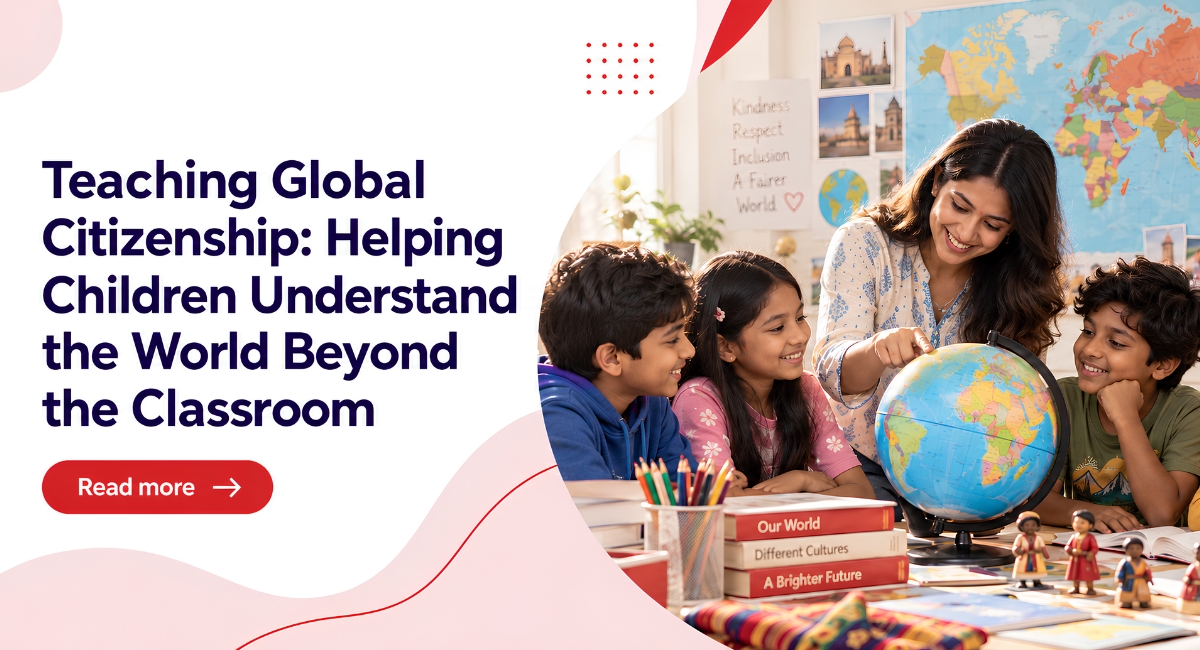
Table of content
- Introduction
- What Is Global Citizenship Education?
- Why Global Citizenship Education for Students Matters
- Global Citizenship Education in Schools
- Digital Awareness and Global Citizenship
- Teaching Global Citizenship Beyond the Classroom
- Education for Sustainable Development and Global Citizenship
- The Role of Teachers in Developing Responsible Global Citizens
- How Parents Can Encourage Global Citizenship at Home
- Global Citizenship Education in India
- Conclusion
- Frequently Asked Questions
Introduction
Children today are growing up in a world that feels much closer and more connected than before. Through technology, books, media, travel and everyday conversations, they are exposed to different cultures, ideas and global issues from an early age. Global citizenship education helps children understand these connections in a simple and meaningful way. It encourages them to respect differences, think carefully about the world around them and understand that their choices can affect other people and the environment.
What Is Global Citizenship Education?
Global citizenship education helps students understand that they are part of a wider world where people, communities and countries are connected. It teaches children to respect different cultures, understand shared challenges and think about how their actions may affect others. UNESCO describes global citizenship as recognising our connection to a wider human community while understanding our responsibilities towards others.
Being a global citizen does not mean forgetting one's own culture, traditions or identity. Children can value their family, language, community and country while also learning to understand people whose experiences are different from their own. This balance helps children grow into confident individuals who are comfortable both with their own identity and with a diverse world.
Why Global Citizenship Education for Students Matters
Global citizenship education for students has become increasingly important because children are exposed to information and ideas from around the world every day. Topics such as climate change, technology, health, sustainability and social responsibility are no longer limited to one country. Helping students understand these connections prepares them to make sense of a changing world.
It also encourages children to ask better questions instead of simply accepting everything they see or hear. They begin to think about whether information is reliable, why people may have different viewpoints and how local actions can have wider effects. These habits help students become thoughtful, responsible and independent learners.
Global Citizenship Skills Encourage Critical Thinking
Critical thinking is one of the most valuable global citizenship skills children can develop. Students regularly come across news, online videos, social media posts and opinions that may show only one side of a topic. Learning to compare information, ask questions and check sources helps them make more informed decisions.
These skills can be developed naturally across subjects. Science can introduce environmental concerns, Social Studies can help children understand communities and societies, while literature can show them life from another person's point of view. When classroom learning connects with real situations, children are more likely to understand why what they are learning matters.
Cultural Awareness for Students Builds Respect
Cultural awareness for students helps children understand that people may speak different languages, follow different traditions or have different ways of living. Instead of seeing these differences as strange, students can learn to approach them with curiosity, respect and openness.
Intercultural understanding goes deeper than simply learning about festivals or food. It encourages children to understand why traditions exist and how people's experiences shape their views. UNESCO highlights intercultural learning and mutual respect as important parts of education in diverse societies.
Global Citizenship Education in Schools
Global citizenship education in International schools does not need to be limited to one subject or one lesson. It can be included naturally in Science, Geography, History, Languages, Social Studies, Art and environmental activities. Students can explore real-world topics while developing communication, empathy and problem-solving skills.
For example, a Geography lesson can look at climate change, while Science can explore conservation and responsible use of resources. Language classes can introduce stories from different cultures, and Social Studies can help children understand fairness, communities and shared responsibilities. This approach makes global learning practical and connected.
Teaching Global Citizenship Through Real-World Questions
Children often understand ideas better when lessons begin with questions they can relate to. A topic about water, for instance, can include questions about why some places face shortages or how water can be used responsibly. A lesson about food can explore where ingredients come from and why reducing waste matters.
These discussions help children connect classroom knowledge with everyday life. Instead of memorising information, they begin to understand how different subjects relate to real people and real situations. This makes global awareness in education more meaningful and easier for students to remember.
Connecting Global Learning With Local Action
Children do not need to travel to another country to understand global citizenship. Many global issues can be explored through what they see around them. Students learning about plastic waste can observe how waste is managed at school, while children studying water conservation can look at how water is used at home.
These simple moments help kids realize that big world problems often start right at home with our everyday habits. When children see those small choices like turning off the tap, cutting down on waste, or keeping local spaces clean; really do add up, being responsible becomes a natural habit they practice every day, rather than just something they read about in a textbook.
Digital Awareness and Global Citizenship
Children today discover much of the world through phones, computers and online platforms. This makes digital awareness an important part of global learning for children. Students need to learn how to identify reliable information, communicate respectfully and understand that what they share online can reach people from many backgrounds.
They should also understand that not everything online is accurate. Teaching children to check information, question unusual claims and think before sharing content helps them become responsible digital users. These habits support both global citizenship and strong critical thinking skills for students.
Teaching Global Citizenship Beyond the Classroom
Some of the best lessons in global citizenship happen outside regular textbook learning. School projects, environmental activities, cultural programmes, exhibitions and community-based experiences can help children explore important ideas in a more practical way.
Students may work together on a sustainability project, take part in a classroom debate or explore how their neighbourhood has changed over time. These experiences build teamwork, empathy and confidence while helping children understand that learning can be connected to real people and real communities.
Education for Sustainable Development and Global Citizenship
Education for sustainable development is closely linked with global citizenship because both encourage children to think about the future. Students can learn how everyday actions such as wasting water, using too much electricity or creating unnecessary waste can affect the environment.
The United Nations Sustainable Development Goal 4.7 highlights the importance of education that develops knowledge and values related to sustainable development, human rights, peace, cultural diversity and global citizenship. When these ideas are explained through everyday examples, children find them easier to understand and practise.
The Role of Teachers in Developing Responsible Global Citizens
Teachers play an important role in helping children understand the world with curiosity, empathy and an open mind. At NewAge World School, teachers create a supportive classroom environment where students are encouraged to ask questions, express their ideas, respect different perspectives and learn from one another.
Through classroom discussions, activities and real-world learning, we help students understand the difference between facts, opinions and assumptions. Rather than simply telling children what to think, our teachers encourage them to think independently, consider different viewpoints and make responsible choices, helping them grow into confident, compassionate and responsible global citizens.
How Parents Can Encourage Global Citizenship at Home
Parents can support global citizenship through simple everyday conversations. Reading books about different communities, discussing age-appropriate news or talking about why people may follow different traditions can help children become more curious about the wider world.
Children also learn by watching how adults behave. When parents speak respectfully about other cultures, avoid quick judgement and show responsibility towards the environment and community, children notice these habits. Simple actions at home can become valuable lessons in kindness, respect and responsibility.
Global Citizenship Education in India
Global citizenship education in India fits well with the country's growing focus on holistic and future-ready education. India's National Education Policy 2020 recognises Global Citizenship Education as an important contemporary area that can help students develop useful knowledge, values and skills for the future.
The idea also connects naturally with the Indian principle of Vasudhaiva Kutumbakam, often understood as "the world is one family." Children can develop a strong understanding of Indian culture, languages and traditions while also learning to respect people and communities from other parts of the world.
Conclusion
Global citizenship is not about expecting children to understand every issue in the world. It is about helping them remain curious, respectful and willing to learn. When children develop critical thinking, empathy, cultural awareness and responsibility from an early age, they are better prepared for both future learning and everyday life.
The best international schools in Yelahanka, including ICSE schools, recognize this imperative and actively work towards instilling global citizenship principles in their students. Teachers equip children to be engaged, compassionate and responsible global citizens by incorporating these ideas into the curriculum.
Connect with NewAge World School, where students are encouraged to develop critical thinking, cultural awareness and a global perspective through meaningful learning experiences in and beyond the classroom. Admissions are now open for 2026–27. Visit NewAge World School or book a school tour to explore our campus, learning environment and approach to education.
Frequently Asked Questions
How can parents teach global citizenship at home?
Parents can teach global citizenship at home by encouraging curiosity through books, age-appropriate news, and conversations about different cultures, while setting a positive example through everyday actions like showing respect to others and caring for the environment.
Can schools teach global citizenship without international travel?
Yes, international travel is not necessary for teaching global citizenship; students can explore the wider world through books, digital resources and cultural activities, while connecting global topics to local community experiences.
Why is global citizenship education important for students?
Global citizenship education is important because it equips students with essential skills such as critical thinking, communication, empathy and cultural understanding which is needed to navigate a connected world and tackle future challenges like sustainability, technology and environmental responsibility.

Shivani Sahu
Shivani Sahu is an experienced blogger and dedicated educator with a decade of teaching experience in Pre-primary education. She loves to help and inspire young children to learn more and grow as individuals. Shivani writes articles to share her knowledge and tips, hoping to motivate children to discover new things, learn a lot, and reach their best potential.

Leave a Reply
Your email address will not be published. Required fields are marked *
Comments
No comments available