Why Teaching Children to Care for Animals Builds Empathy and Responsibility
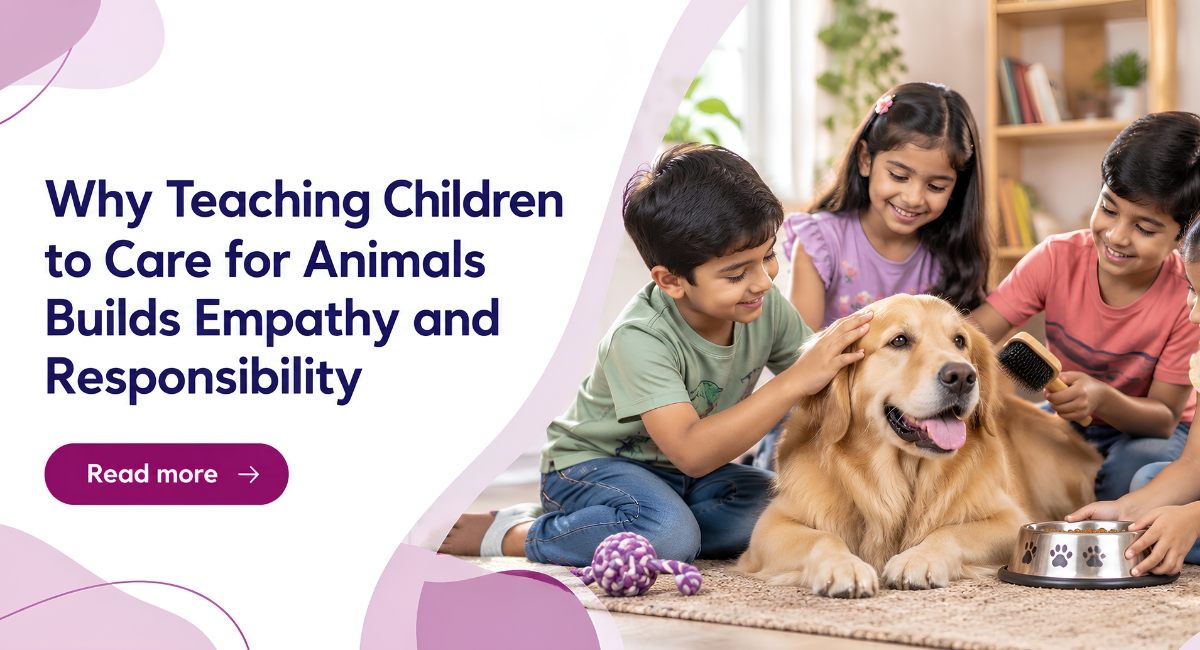
Table of content
- Introduction
- Why Caring for Animals Is a Valuable Learning Experience
- How Animal Care Helps Children Develop Empathy
- Teaching Responsibility Through Animal Care
- How Animals Help Children Understand Emotions
- Simple Ways Children Can Learn to Care for Animals
- How Parents and Schools Can Guide Children
- Safety and Respect Around Animals
- Frequently Asked Questions
- Conclusion
Introduction
Have you ever noticed how quickly children become curious when they see an animal? A playful puppy, a quiet cat or even a bird sitting outside the window can easily catch their attention. There is something special about the connection children can build with animals.
But this connection can offer much more than fun and happy moments. Teaching children to care for animals can help them understand kindness, patience and respect in a practical way. When children learn that animals need food, clean water, rest, safety and gentle care, they begin to think about needs beyond their own. These simple experiences can gradually build empathy and responsibility. With the right guidance from parents and teachers, caring for animals can become a meaningful part of a child's emotional, social and personal development.
Why Caring for Animals Is a Valuable Learning Experience
Children often understand a lesson better when they experience it instead of simply hearing about it. Caring for animals can provide many such everyday learning moments. A child may learn patience when a pet does not want to play. They may understand kindness when they gently comfort an animal that feels nervous. They can also learn that looking after another living being requires regular care and attention.
Research available through the National Library of Medicine has explored connections between children's relationships with pets and qualities such as empathy, compassion and positive attitudes towards animals. The benefits of caring for animals for children can also be seen in how they begin to notice the needs of others. They learn that caring is not only about playing with or loving an animal. It also involves patience, attention and respect. These simple lessons can support the way children interact with friends, family members and people around them.
How Animal Care Helps Children Develop Empathy
Empathy means understanding and caring about how another person or living being may feel. For young children, this idea can be easier to understand through everyday experiences.
Teaching empathy to children through animals can begin with simple observations. A dog may move away when it feels uncomfortable. A cat may hide when there is too much noise. A bird may fly away when someone comes too close.
Parents and teachers can ask questions such as, "Why do you think the animal moved away?" or "What can we do to make them feel safe?" These small conversations encourage children to look beyond their own wishes and think about another living being's feelings.
Over time, this habit can also help children in their relationships with people. A child who learns to notice when an animal needs space may become more aware when a friend feels uncomfortable, worried or left out. Empathy takes time to develop, and simple everyday experiences give children useful opportunities to practise it.
Teaching Responsibility Through Animal Care
Responsibility develops gradually when children are trusted with small tasks and encouraged to complete them regularly. Teaching responsibility to kids can become easier when they understand why a task matters. If a child helps refill a pet's water bowl, for example, they learn that the animal depends on clean water every day.
Younger children can help with simple duties under adult supervision. Older children may organise pet supplies, assist with feeding or help with safe grooming. The aim is not to make children fully responsible for a pet. Adults should always remain responsible for the animal's health, safety and important care needs. NewAge World School also highlights responsibility, empathy and positive values as important parts of personality development in students. Giving children suitable responsibilities at home and school can help them understand that their actions matter.
How Animals Help Children Understand Emotions
Animals cannot explain their feelings using words. Children need to observe their behaviour and learn when an animal may feel comfortable, playful, nervous or frightened. This can help children understand non-verbal communication. If an animal moves away, children can learn that it may need space. If it appears frightened by loud sounds, they can understand why behaving calmly is important. The lesson is simple. Someone does not always need to say they are uncomfortable for their feelings to matter.
This understanding can also support children's relationships with people. A quiet friend may be feeling sad, while a younger sibling may struggle to explain why they are upset. NewAge World School also explores emotional understanding through stories that build empathy and emotional intelligence. Stories, real experiences and thoughtful conversations can all help children understand feelings from different points of view.
Simple Ways Children Can Learn to Care for Animals
Animal care for children should always be simple, safe and suitable for their age. Children do not need difficult responsibilities to learn valuable lessons. If there is a pet at home, younger children can help fill a water bowl or organise pet supplies under supervision. Older children may assist with feeding, safe grooming or keeping the pet's area tidy.
Families without pets can still teach these values. Children can observe birds without disturbing them, learn why litter can harm wildlife or understand why animals need clean and safe surroundings. Schools can use stories, drawing, classroom discussions and projects to introduce responsible animal care. Children might make posters about kindness towards animals or discuss what pets need to remain healthy and comfortable. These activities make learning practical and give children a chance to express what kindness, respect and responsibility mean in their own words.
How Parents and Schools Can Guide Children
When parents treat animals gently and respect their space, children see what responsible behaviour looks like. Adults can also explain why a particular action matters. Instead of simply asking a child to fill a water bowl, for example, they can explain why fresh water is important for an animal.
Schools can support these lessons through stories, classroom discussions, nature activities and age-appropriate projects. An animal does not need to be present in the classroom for children to learn about kindness and responsible care. These lessons can become part of wider character development. NewAge World School discusses the role of schools in shaping a child's personality and development, including qualities such as empathy, kindness, cooperation and integrity. When parents and teachers encourage similar values, children get more opportunities to practise them in everyday life.
Safety and Respect Around Animals
Kindness towards animals should always include safety and respect. Children need to understand that not every animal wants to be touched. They should never approach an unfamiliar animal without permission and adult guidance. Animals that are eating, sleeping, frightened or caring for their young should be given space.
Children should also understand that animals are living beings, not toys. Pulling tails, chasing animals, shouting at them or frightening them for fun is never acceptable. Good hygiene is equally important. Children should wash their hands properly after suitable contact with animals and before eating.
Adults should supervise young children around pets and other animals. Even a familiar animal may react differently when it feels frightened, uncomfortable or unwell. These simple lessons help children understand that caring for animals is not only about showing affection. It also means respecting boundaries, understanding their needs and making safe choices.
Conclusion
Caring for animals teaches children simple but important values like kindness, empathy, patience and responsibility. Small actions, such as giving an animal fresh water or respecting its space, help children understand the importance of caring for others.
Admissions are now open for 2026–27. Visit NewAge World School or book a school tour to explore our campus, learning environment and approach to education.
Frequently Asked Questions
Why should children learn to respect animals?
Respecting animals teaches children that other living beings have needs and boundaries. It can encourage compassion, patience and responsible behaviour.
What simple pet responsibilities can children handle?
Depending on their age, children may refill water bowls, organise pet supplies, keep safe areas tidy or assist an adult with feeding and grooming.
Can children learn animal care without owning a pet?
Yes. Children can learn through books, nature observation, school activities and safe interactions with animals. They can also learn to respect wildlife and protect the environment around them.
At what age can children start helping with animal care?
Children can begin with simple supervised activities at a young age. Tasks should match their age and maturity, while adults remain responsible for the animal's overall care.
How does caring for animals help children develop empathy?
Caring for animals encourages children to notice another living being's needs and feelings. With adult guidance, they can learn to respond with kindness, patience and respect.

NewAge World School












Leave a Reply
Your email address will not be published. Required fields are marked *
Comments
No comments available