World Gratitude Day: Why Teaching Gratitude Matters in a Child’s Development
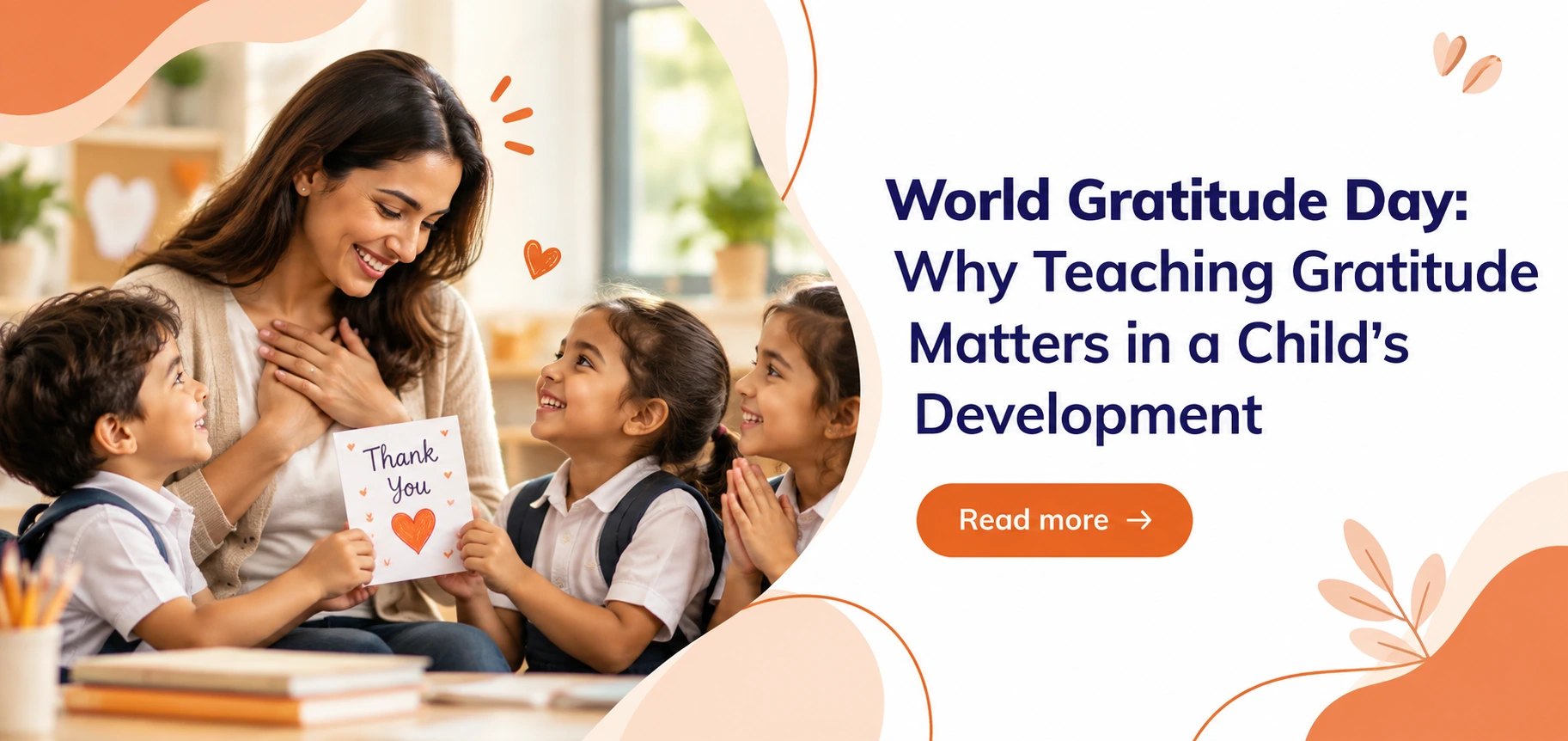
Table of content
- Introduction
- Why gratitude is an important life skill during childhood
- How appreciation supports emotional and social development
- Helping children notice kindness in ordinary daily moments
- Simple gratitude practices families can use every day at home
- How schools can make gratitude part of meaningful learning
- Keeping gratitude sincere without forcing children to perform
- Frequently asked questions
Introduction
World Gratitude Day gives parents and schools a meaningful chance to talk about appreciation. Gratitude is more than asking a child to say thank you. It means noticing kindness, recognising effort and valuing the people and experiences that support everyday life. Children learn this slowly through examples, honest conversations and simple routines. A parent expressing thanks, a teacher appreciating effort or a child recalling a happy moment can build understanding. The goal is not to make children ignore disappointment or act cheerful all the time. It is to help them notice positive moments while giving every feeling space and respect.
How Appreciation Supports Emotional and Social Development Today
The importance of gratitude in child development appears in how children relate to others. When a child notices that someone shared, helped or listened, they begin to understand another person’s effort. This awareness can strengthen empathy and kindness.
Gratitude may also help children focus on supportive experiences rather than only on what is missing. That does not mean they should dismiss sadness, anger or frustration. Healthy emotional development in children includes recognising every feeling and learning how to express it safely. Appreciation can sit beside an uncomfortable emotion without replacing it.
Children who practise gratitude may become more thoughtful in friendships and willing to return kindness. They learn that relationships grow through care and cooperation. The benefits of gratitude for children can include connection, positive reflection and confidence built through meaningful relationships.
Helping Children Notice Kindness in Ordinary Moments Now Too
Teaching gratitude to children works best when adults connect it to real events. Instead of asking a broad question such as “What are you grateful for?” a parent might ask, “Who helped you today?” or “What made you smile during lunch?” Specific prompts are often easier for young children to answer.
Adults can name small moments without giving a lecture. They might appreciate a relative’s call, a neighbour’s help, a home-cooked meal or a patient friend. Children learn that gratitude is not limited to gifts. It includes time, effort, nature, comfort and companionship.
Noticing should come before expecting a response. Some children speak easily, while others need time to think, draw or act. A child may care deeply without answering quickly. Respecting these differences keeps the lesson meaningful.
Simple Gratitude Practices Parents Can Use Every Day at Home
Parents can begin with one routine. At dinner or bedtime, each person might share a pleasant moment. It could be a game, help with homework or an interesting bird. Parents should participate honestly instead of correcting every response.
Other gratitude activities for kids include drawing for someone, keeping a gratitude jar, writing a note or photographing something meaningful. Younger children can dictate their thoughts. Older children may enjoy a journal, but it should not become compulsory homework.
Actions can express appreciation. A child might set the table after a meal or care for a shared space. Such gestures connect grateful thoughts with responsibility. Developing a grateful mindset takes repetition, but it should suit the child’s age, personality and family culture.
How Schools Can Make Gratitude Part of Meaningful Learning Daily
Schools in North Bangalore like NewAge World School can create many natural opportunities for gratitude. Teachers can thank students for cooperation, recognise a classmate who helped and discuss the people whose work keeps the school running. Stories can help children explore appreciation, kindness and different points of view without making the lesson feel abstract.
Projects can include appreciation cards, artwork or shared memory pieces. NewAge International School describes children using creative activities, family participation, writing and reflection to explore gratitude. The focus was on meaningful moments, teamwork and appreciation rather than an attractive object.
Activities should be inclusive because children have different homes, resources, abilities and experiences. Prompts should not assume everyone has the same family or possessions. Students can appreciate a person, place, skill, memory, natural feature or helpful experience. This allows every child to participate comfortably.
Keeping Gratitude Sincere Without Forcing Children to Perform
Telling a disappointed child to “be grateful” can dismiss their feelings. Acknowledge disappointment kindly before discussing another person’s effort. Parents should avoid comparing children with people who have less. Guilt may create shame instead of empathy. Children can learn about different lives through respectful conversations, community experiences and suitable stories. Kindness grows from understanding rather than pressure.
Parents and teachers can model appreciation by being specific. “Thank you for putting your books away” tells a child what was helpful. Children also need to see adults apologise, accept thanks and value overlooked work. Daily example is more powerful than a special lesson.
Helping Children Carry Appreciation Into Their Future Lives Today
Gratitude develops through ordinary moments repeated with care. When parents notice effort, speak kindly and appreciate others, children see what the value looks like in real life. Simple family routines and thoughtful classroom activities can help them practise without turning appreciation into a performance. Regular practice also helps children understand that appreciation is not limited to special events. It can shape how they respond to help, care for relationships and recognise goodness in familiar places each day.
The goal is not a child who always says the correct words. It is a young person who notices support, respects others and values kindness. With patience, example and honest emotions, gratitude can support relationships, empathy and self-awareness. A celebration can begin the conversation, but everyday actions make appreciation part of a child’s character.
Conclusion
Gratitude is a simple value that can make a meaningful difference in a child’s emotional and social development. World Gratitude Day is a good reminder for parents and schools to help children notice kindness, appreciate effort and value the people around them. Through everyday conversations, thoughtful activities and positive examples, children can slowly develop gratitude as a natural habit that supports empathy, stronger relationships and a caring attitude as they grow.
Want to see how learning comes to life at NewAge World School? Academic admission are now open. Connect with our admissions team to learn more about our learning environment, curriculum and facilities. Book a school tour today and experience our campus in person.
Frequently Asked Questions
Can gratitude help when a child is upset or disappointed?
It may offer perspective, but adults should acknowledge the difficult feeling first. Gratitude should support emotional balance, not silence sadness, anger or disappointment.
Should children keep a gratitude journal every single day?
Only if they enjoy it. Drawing, talking, making a card or helping someone can be equally valuable. The routine should suit the child’s age and interests.
What if a child cannot think of anything to appreciate?
Avoid pressure. Offer a specific prompt about a person, place or small moment. Adults can share their own answer first and allow the child time.
Is saying thank you the same as genuinely feeling grateful?
No. Polite words are useful, but genuine gratitude also involves recognising another person’s kindness or effort. That understanding develops gradually with experience.
At what age can a child begin learning about gratitude?
Children can begin with simple ideas in the early years. They may learn to notice help, practise polite words and express appreciation through pictures or actions.

NewAge World School







Leave a Reply
Your email address will not be published. Required fields are marked *
Comments
No comments available