Kannada Rajyotsava Celebration at NewAge World School
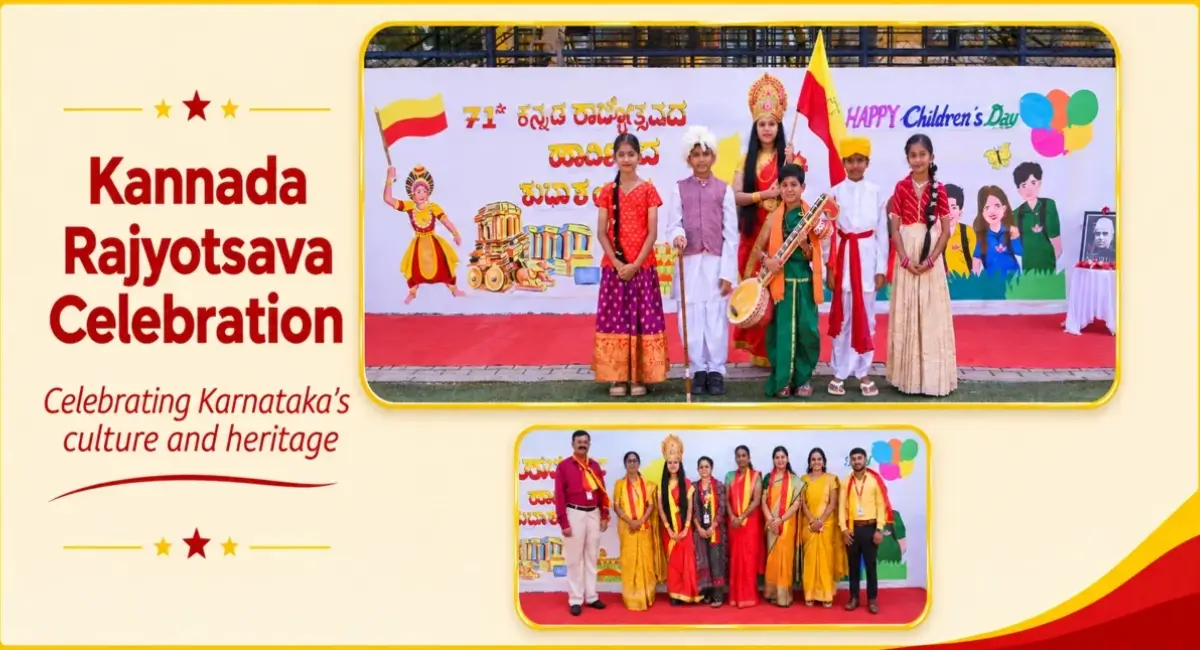
Table of content
1.Understanding the Meaning of Kannada Rajyotsava
2.Opening Our School Celebration
3.Student Songs and Dance Performances
4.Exploring Kannada Literature and Cultural Personalities
5.Our Reflections as Teachers
6.Frequently Asked Questions
7.Conclusion
Introduction
As teachers, we often look for ways to help children connect what they learn with the world around them. Our Kannada Rajyotsava celebration at NewAge World School gave us one such opportunity. Through songs, dance, theatre and presentations, our students explored Karnataka’s language and cultural heritage. Children from different grades contributed to the programme, while our Grade 10 students took on the anchoring. For us, the occasion was a chance to help children understand why we celebrate the state we call home. It also reminded us how much learning can happen when children take an active part in a school celebration.
Understanding the Meaning of Kannada Rajyotsava
Kannada Rajyotsava, also called Karnataka Rajyotsava, is celebrated on 1 November each year to mark the unification of Kannada-speaking regions in 1956. The state was then known as Mysore and was renamed Karnataka in 1973. For children, understanding this background gives the celebration a meaning beyond the performances. The Karnataka Tourism guide to Kannada Rajyotsava offers more information about the occasion and its history.
At NewAge, our aim was to bring that connection closer to the students. A song, a character portrayed on stage or a presentation about the state can become a starting point for questions. Why is this person remembered? What does this symbol represent? These are conversations we can continue in the classroom after the programme.
Opening Our Kannada Rajyotsava Celebration at NewAge World School
Our programme opened with a prayer by the choir group, followed by a thought for the day from a Grade 8 student. A Grade 9 student then spoke about the significance of Karnataka Rajyotsava. This opening gave the audience some context before the cultural performances began. With Grade 10 students anchoring the programme, students also had a role in guiding the event from one presentation to the next.
As teachers, we value these opportunities to give children responsibility. Preparing a short talk or introducing a performance involves choosing words, practising and speaking before an audience. A school celebration provides a practical setting for this work, with teachers available to guide students along the way.
Student Songs and Dances for Kannada Rajyotsava
The cultural programme included performances by children from several primary grades. Each item gave students a different way to participate, from expressing a song through actions to presenting a dance. Having contributions from different age groups helped make the programme a shared school occasion.
Bharatanatyam and a Kannada Group Dance
A Grade 2 student presented Bharatanatyam, while Grade 5 students performed a Kannada group dance. These two items brought different dance forms into the programme. From a teacher’s perspective, preparing for dance also gives children practice in following a sequence, listening to music and presenting their work to others. We value the effort that goes into getting ready for the stage as well as the performance itself.
The Chappale Chappale Action Song
Our Grade 1 children took part in the action song “Chappale Chappale”. An action song gives younger students a way to combine words with movement and participate as a group. For children who are still becoming comfortable with stage activities, a shared performance offers an opportunity to take part alongside their classmates.
Exploring Kannada Literature and Cultural Personalities
The programme also introduced students to Karnataka’s symbols, writers and cultural figures. These presentations gave us material to return to in lessons and everyday conversations. Rather than leaving the celebration as a single event, we can use it to encourage further reading and questioning.
A Presentation on Karnataka State Symbols
Grade 3 students presented Karnataka’s state symbols. This brought a learning element into the programme and gave the audience an opportunity to become more familiar with the state. In class, we can build on the presentation by asking children which symbol they remember and helping them find out more about it through pictures, books or a drawing activity.
A Kuvempu Skit and Fancy Dress Presentation
Grade 5 theatre students presented a skit titled “Vishwa Maanava Kuvempu”. The programme also included a Grade 4 fancy dress presentation featuring portrayals of Kuvempu, Purandara Dasaru and Dr. Rajkumar. Bringing these personalities into a school programme creates an opening to discuss their work in literature, music and cinema. As teachers, we can follow up with a simple introduction suited to the children’s age, helping them connect a name from the stage with the person’s contribution.
Remembering Kannada Jnanpith Awardees
Students from Grades 6 to 8 contributed a presentation on Kannada Jnanpith awardees. This gave Kannada literature a place in the celebration alongside music, dance and theatre. It also offered a starting point for introducing students to writers whose names they may encounter in books and lessons. The programme closed with a student vote of thanks and the State Anthem by the choir group.
Our Reflections as Teachers on the Celebration
What we value about a programme like this is the opportunity it creates for children to learn by taking part. Some students spoke, some danced and others contributed through music or theatre. Their roles were different, but each contribution belonged to the same celebration. Our responsibility as teachers is to guide that participation and help children understand what they are presenting.
The Students and Team Behind Our Kannada Rajyotsava Celebration
Our Kannada Rajyotsava programme brought together contributions from students across different grades. Grade 10 students Honisha, Rashmitha and Daksh anchored the event, while the choir group led the prayer and State Anthem. Students contributed through speeches, dance, an action song, theatre and cultural presentations, with Honisha delivering the vote of thanks. We thank our Principal, Mrs. Sujita G Nayak, the Vice Principal, event coordinator and teachers for supporting the celebration. As teachers, helping our students prepare and take responsibility for their roles was a meaningful part of the occasion.
Conclusion
Our Kannada Rajyotsava celebration at NewAge World School brought language and culture into a programme shaped by student participation. As teachers, we appreciated the opportunity to guide children as they explored Karnataka through performances and presentations. We want those connections to continue through stories, questions and classroom conversations throughout the year. To learn more about our school community and approach to learning, visit the campus and speak with our team.
Looking for an international school in North Bangalore that supports good learning habits alongside academics? Discover NewAge World School and learn how we support your child’s growth. Admissions are open for 2027–28. Apply Now or Book a School Tour to meet our team and explore the campus.
Frequently Asked Questions
How Can Parents Support Kannada Learning After the Celebration?
Ask your child about the programme and explore one topic they found interesting. A short story, a Kannada song or a few everyday words can help continue the conversation at home without making it feel like extra homework.
How Did NewAge World School Celebrate Kannada Rajyotsava?
The celebration included prayer, a thought for the day, a talk on the occasion’s significance, Bharatanatyam, an action song and a Kannada group dance. Students also presented Karnataka’s state symbols, a Kuvempu skit, fancy dress portrayals and a presentation on Kannada Jnanpith awardees.
Why Is Kannada Rajyotsava Celebrated?
Kannada Rajyotsava marks the unification of Kannada-speaking regions on 1 November 1956. It is an occasion to celebrate Karnataka’s language, history and cultural heritage. The state, originally called Mysore, was renamed Karnataka in 1973.
NewAge World School






Leave a Reply
Your email address will not be published. Required fields are marked *
Comments
No comments available